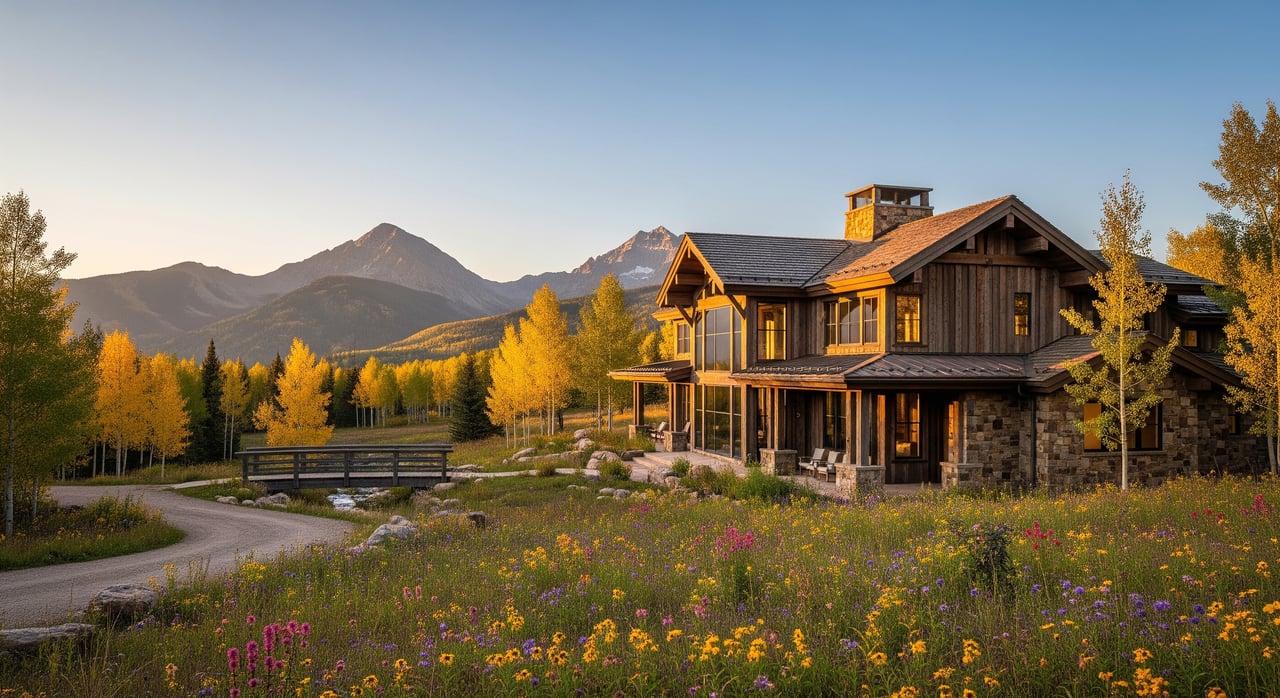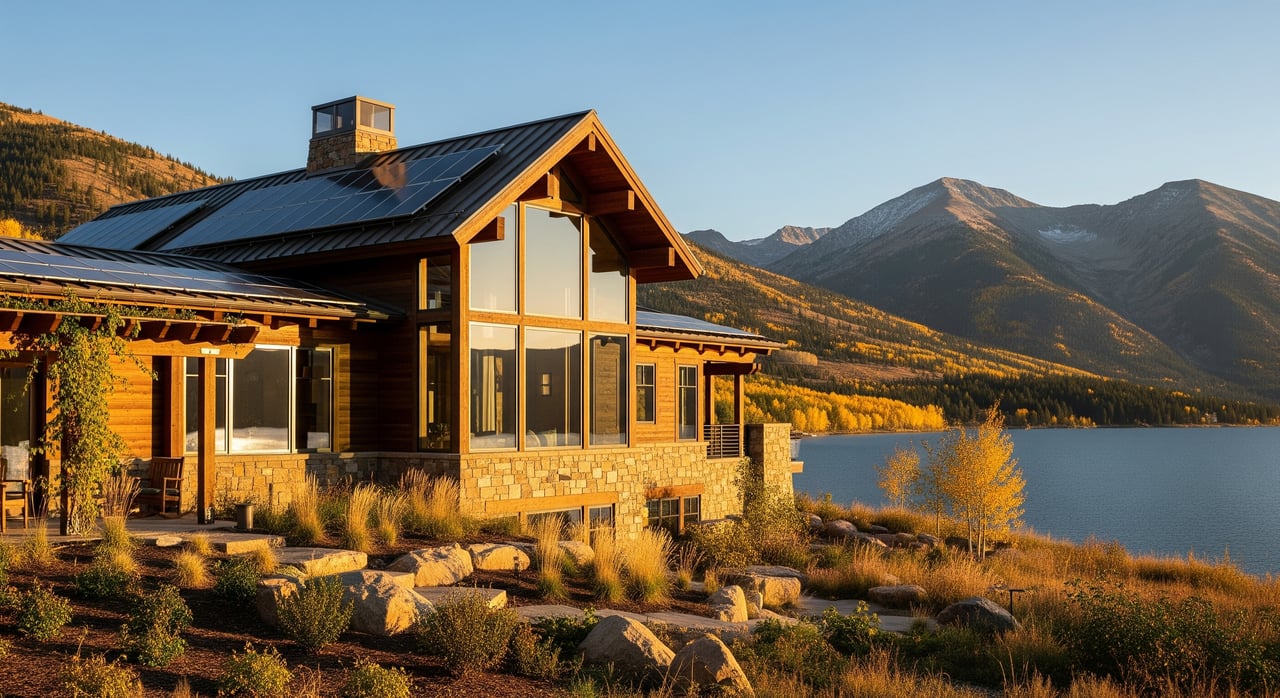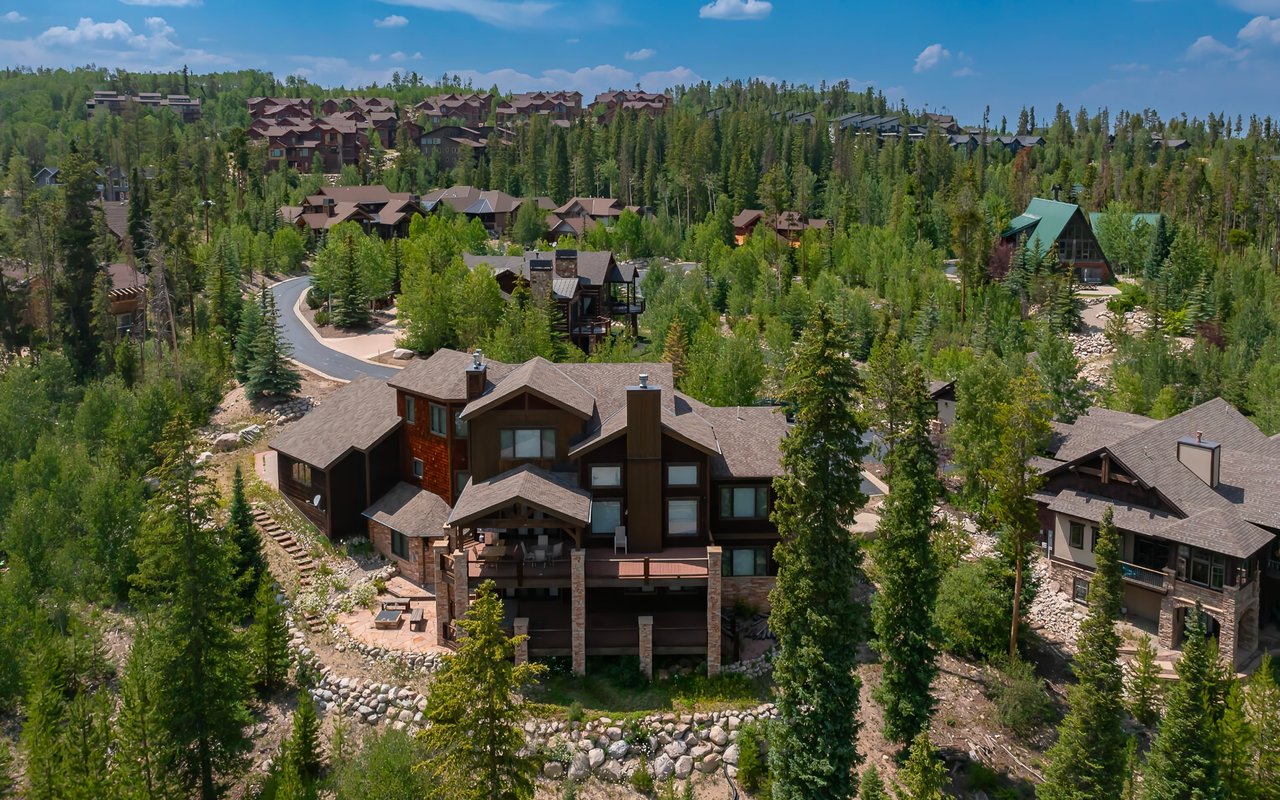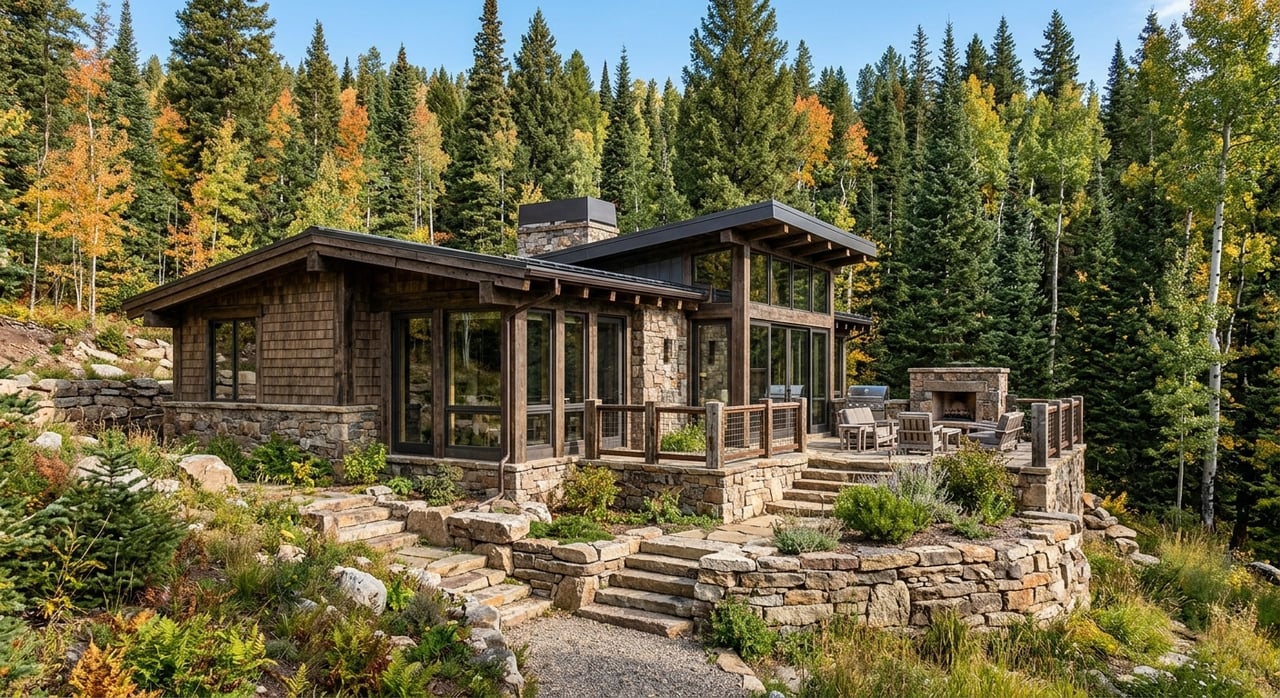
Thinking about building a custom cabin in Grand Lake? It is an exciting idea, but it can also get complicated fast if you start sketching floor plans before you confirm the lot, the rules, and the true cost of building in the mountains. If you want a smoother path from land purchase to finished home, it helps to understand the local process early. Let’s dive in.
Start With the Lot First
Before you think about finishes or square footage, confirm exactly where the parcel sits and which local rules apply. In Grand Lake, that first step matters because planning and zoning can fall under the Town of Grand Lake or unincorporated Grand County, while building permits and inspections go through the Grand County Building Division.
If your lot is inside town limits, the Town of Grand Lake oversees zoning within municipal boundaries. If it is outside town in unincorporated Grand County, county planning and zoning manages development standards such as land use, setbacks, lighting, landscaping, and signs. That difference can shape your design, your permit path, and your timeline.
Check Jurisdiction and Overlay Areas
One of the most important early questions is whether the parcel falls in the Three Lakes Design Review Area. Grand County recommends verifying that status in the Parcel Viewer before you submit for permit review, because parcels in that overlay may need extra design information and a separate zoning inspection before other inspections can move forward.
If the lot is near water or drainage corridors, review floodplain status early too. Grand County floodplain regulations apply to new building permit applications in mapped 100-year floodplain areas and in areas identified by site-specific flood studies. A floodplain issue is much easier to address before your plans are finalized.
Review Setbacks and Site Geometry
Setbacks can affect what you are actually able to build, even on a parcel that looks generous on paper. Grand Lake notes that setbacks vary by zone district, with one example in a single-family residential high-density district showing a 25-foot front setback and 10-foot side and rear setbacks.
Lot shape matters as much as lot size. If a project crosses a center lot line, Grand Lake requires a lot line agreement. That is one reason many buyers benefit from confirming buildable area before they spend too much on design work.
Verify Access and Utilities
Do not assume access or utility service is simple just because a lot is listed for sale. Grand County says access drives should follow the county Road and Bridge Manual, and any state highway access requires contact with CDOT.
Utility availability also needs parcel-specific confirmation. If the lot is in town, Grand Lake typically provides water service within town limits, but the property owner is responsible for the service-line cost from the main to the house. Outside town water and sewer service, you will need proof of legal water and sanitation for permit review.
Understand the Permit Process Early
Many buyers are surprised to learn that a custom cabin in Grand Lake often involves both town and county review. The Town of Grand Lake states that all building and construction permits and all inspections go through the Grand County Building Department, except right-of-way and grading permits.
Grand County submits permit applications online through CloudPermit, and a new cabin will require a permit. County rules say permits are required for construction, alteration, relocation, repair, change of use, or demolition of a building or structure, with only narrow exceptions for very small accessory items.
Know What You Need to Submit
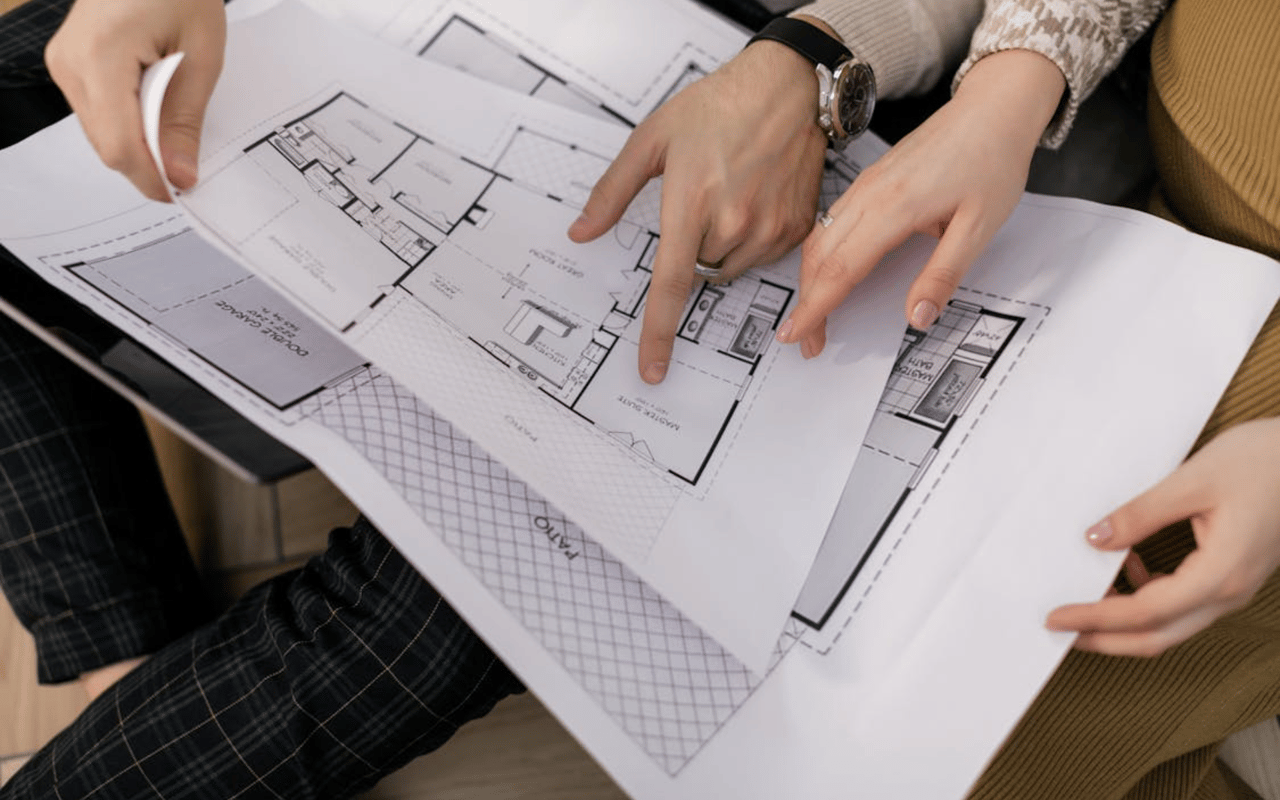
For a new residence with a full floor plan, Grand Lake requires an architect or engineer stamp. A typical town submittal includes a site plan, construction drawings, and material or color samples, and the town FAQ notes that four copies are needed total, one for the town and three for the county.
If your property is in the Three Lakes area, expect additional design-review details in the permit package. Grand County requires information on roof, siding, trim, door, and foundation color or type, which reflects the county’s emphasis on visual compatibility with the landscape.
Confirm Contractor Requirements
If your project is in town, contractor paperwork matters early. Grand Lake requires contractors on the job to have a town business license before the permit application is accepted, and general contractors must be licensed if they are working in town.
That means your builder choice can affect your schedule. It is smart to verify licensing and local readiness before you line up multiple trades or lock in a build calendar.
Verify Codes at Permit Time
Grand County’s current code page lists the 2015 International Residential, Building, Mechanical, Plumbing, Fuel Gas, Energy Conservation, and Fire Codes with local amendments, along with the 2023 National Electrical Code. Because code adoption can change, you should verify the exact code set in force when you are ready to submit.
That small step can save you from expensive redesigns. Mountain builds already involve more moving parts, so it helps to avoid assumptions wherever possible.
Design for Grand Lake Conditions
A cabin that looks right in the mountains also needs to perform well in mountain conditions. In Grand Lake, that means planning for weather, site visibility, lighting, and wildfire resilience from the very first design conversations.
This is also where good design and local compliance tend to overlap. The same choices that help a home sit naturally on the land can also support review and long-term durability.
Respect Local Design Standards
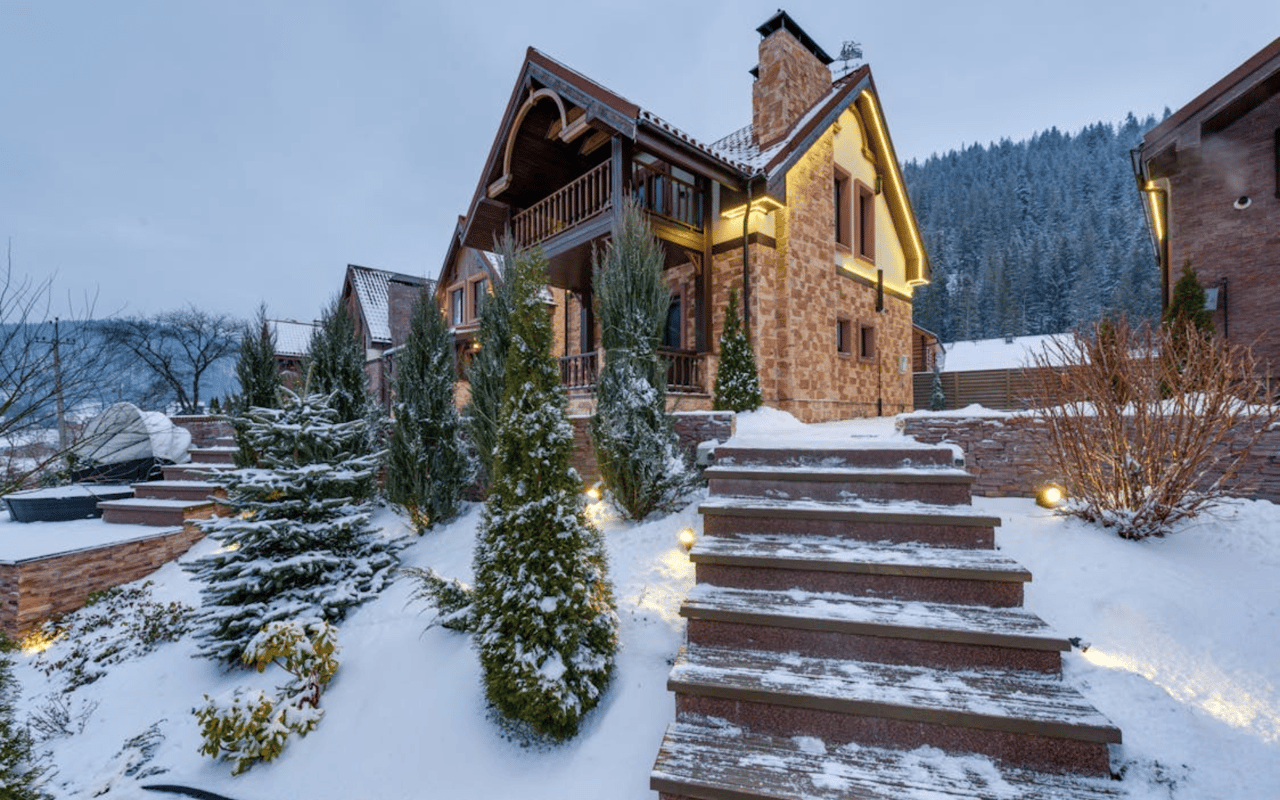
Grand Lake’s design review standards are intended to preserve the town’s rustic character and visual continuity. The code says materials, colors, and massing should fit the local context, and highly reflective finishes are not permitted.
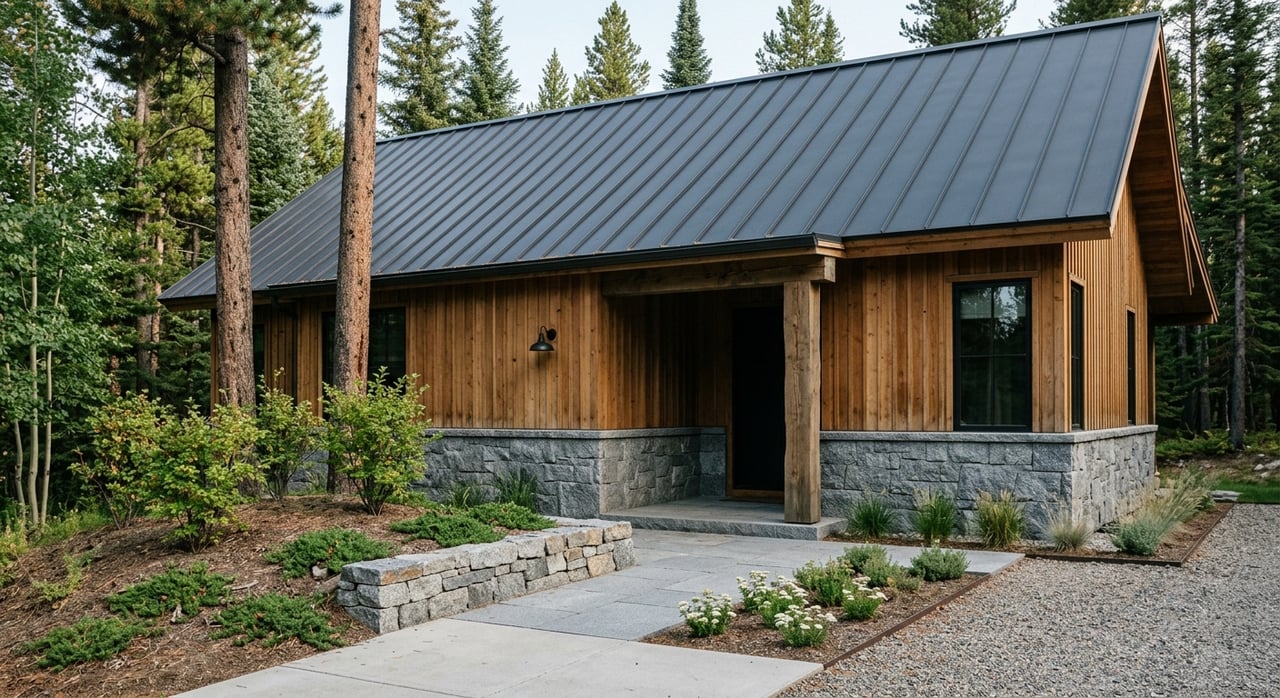
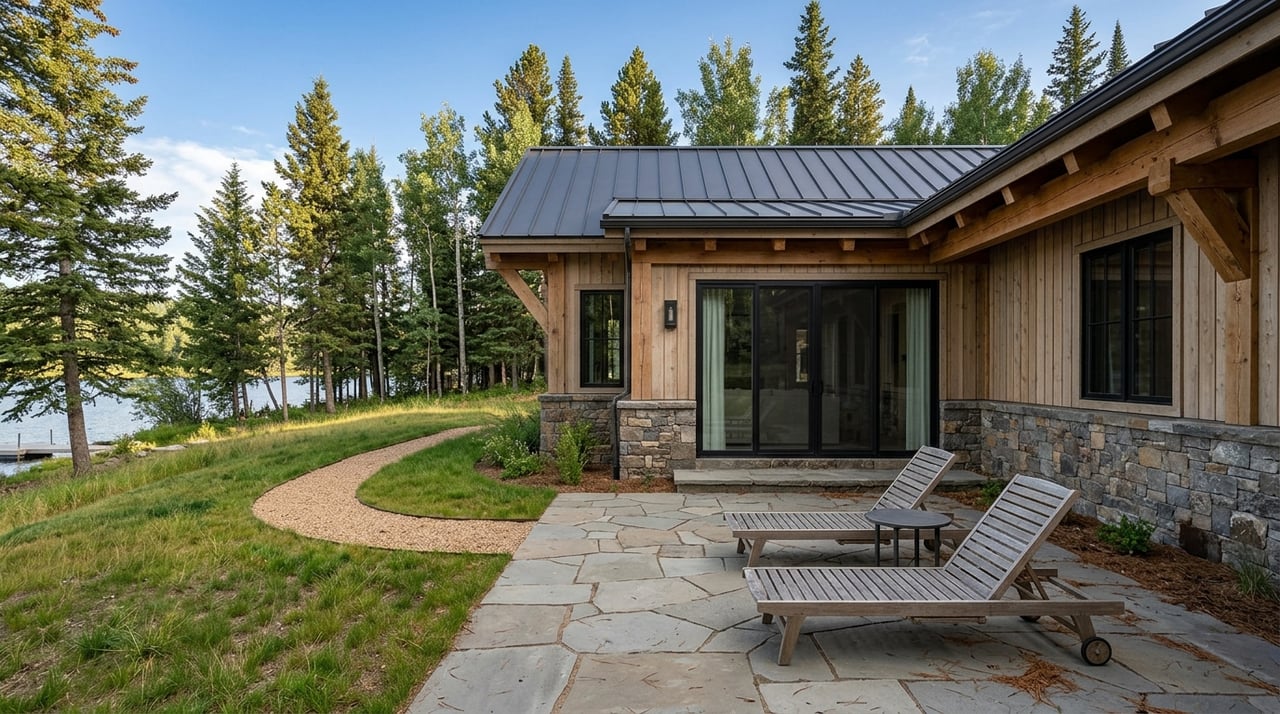
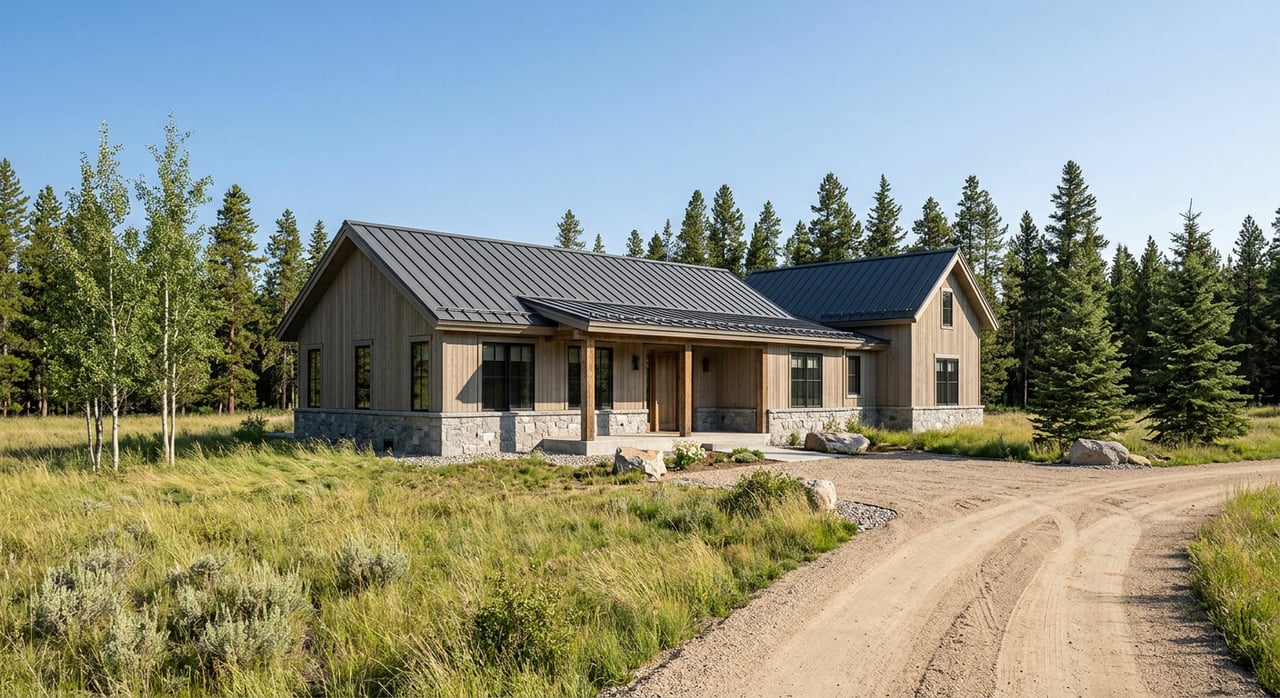
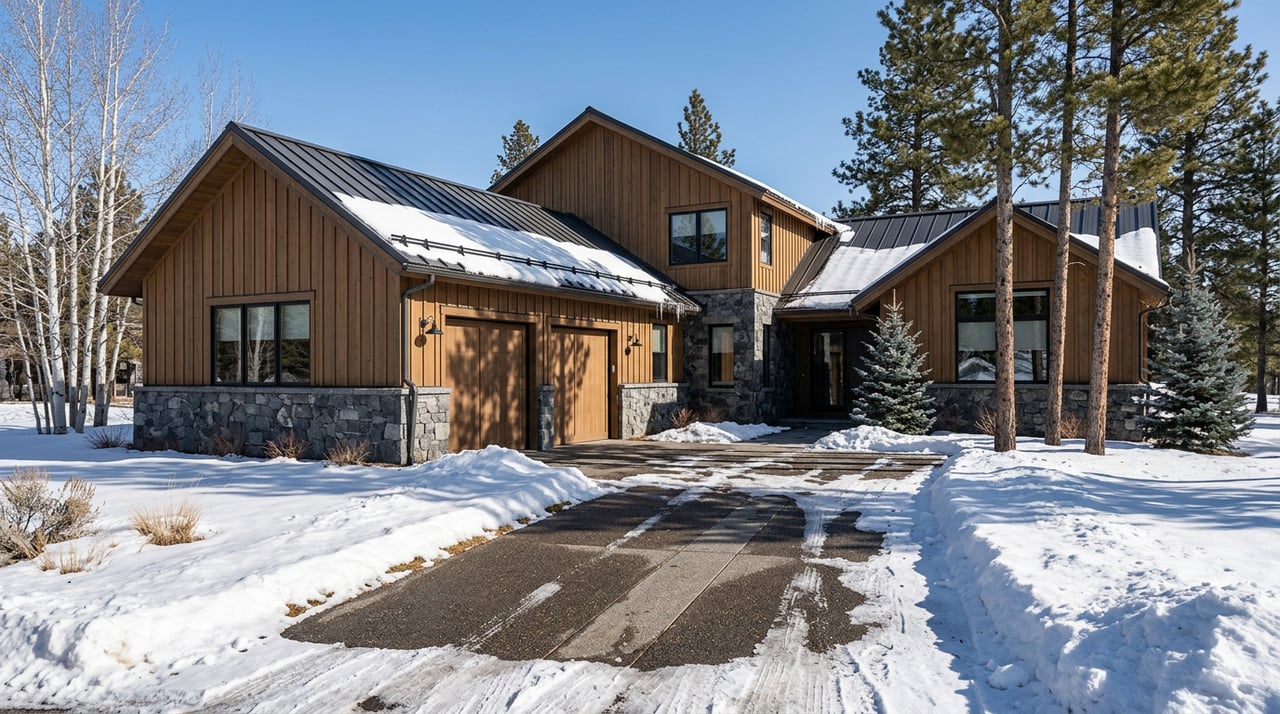
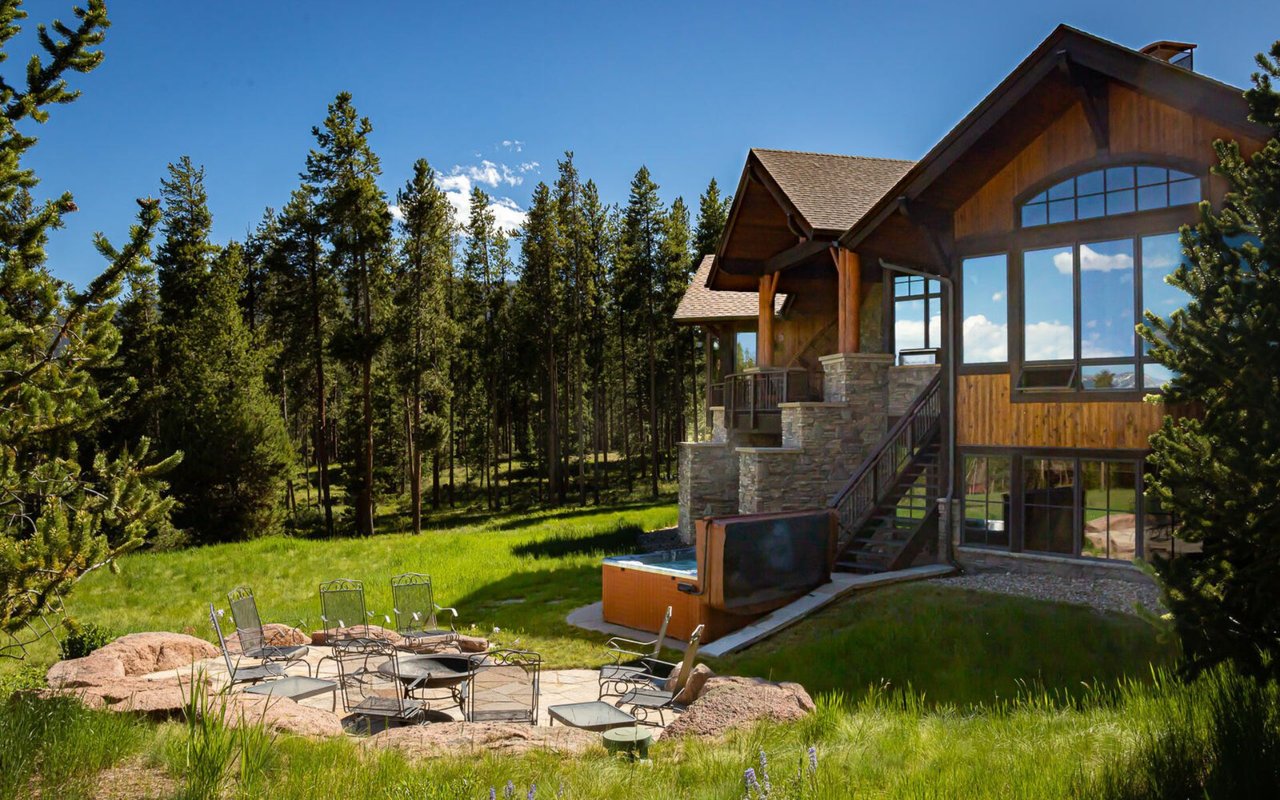
In the Three Lakes design review area, Grand County also emphasizes exterior elements that blend with the landscape. County architecture guidance points to roof options such as treated wooden shake, earth-tone composition shingles, slate, and dark non-reflective metal roofing.
Plan for Dark-Sky Lighting
Exterior lighting is another detail that can affect both aesthetics and compliance. Grand Lake’s standards call for dark-sky-oriented, down-cast, low-glare lighting that reduces sky glow, light trespass, and visual clutter.
That approach fits the mountain setting well. It also helps preserve the night-sky experience that many Grand Lake buyers value when they picture a cabin retreat.
Consider Water and Ridgeline Constraints
Site planning in the Grand Lake area is closely tied to scenic protection and water quality. Grand County says structures should not tower above ridgelines, and buildings in the Grand Lake area generally must be at least 150 feet from the high-water mark of lakes, streams, creeks, rivers, or ditchways unless water quality protection is demonstrated.
Even with that demonstration, the setback cannot be less than 30 feet. If you are shopping for a lot with views or water adjacency, those rules are worth understanding before you set expectations for home placement.
Build Wildfire Resilience Into the Plan
Wildfire planning should start before your final site plan is complete. Grand County recommends defensible space, thinning tree and brush cover within 30 feet of the home, maintaining crown spacing at 10 to 12 feet, stacking firewood at least 15 feet away, pruning branches to 10 feet above ground, trimming branches within 15 feet of a chimney, and reducing forest density out to 100 feet where possible.
Those guidelines can influence where you position the cabin, how you treat the driveway approach, and what exterior details make sense. They are not just post-construction maintenance tips.
Include Exterior Protection Details
Grand County also advises cleaning roofs and gutters, screening vents, protecting under-deck areas, and keeping flammable material away from exterior walls. For many mountain homes, these choices improve both resilience and long-term upkeep.
If you are still evaluating land, a wildfire risk assessment can be a useful pre-design tool. Grand County and the Grand County Wildfire Council offer wildfire risk assessments, including a free property assessment and seasonal rapid parcel-level reviews.
Budget for More Than the House Price
One of the biggest planning mistakes in a custom cabin project is focusing only on the construction contract. In Grand Lake, your total budget may also include use tax, affordable housing fees, water tap fees, utility extensions, septic or well costs, access work, grading, and wildfire mitigation.
That does not mean your project is out of reach. It means you should build your budget around the full site-development picture, not just the house itself.
Town Fees and Water Costs
Grand Lake says its use tax is based on the total cost of project materials. The town also states that the affordable housing fee may be $1.00 per square foot of primary structure and $0.25 per square foot of accessory structure, and both use tax and affordable housing fees are collected at the time of building permit submission.
If your home will connect to town water, the current town water page lists tap fees of $6,500 for a 3/4-inch tap, $13,000 for a 1-inch tap, and $26,000 for a 1.5-inch tap. Water-main extension and service-line installation are also at the owner’s expense.
OWTS, Wells, and Rural Infrastructure
Outside town water and sewer service, Grand County requires proof of legal water and sanitation for permit review. For OWTS permits in unincorporated county, new systems and replacements currently carry an $850 fee, septic repairs are $400, and the county requires a Declaration of Covenants with a $43 recording fee.
If proof of legal water is needed, Grand County says an approved well permit from the Colorado Division of Water Resources should be uploaded. These are the kinds of details that can change your budget and build schedule if you discover them late.
Expect Mountain Construction Costs
Grand County’s design criteria call for a 115 mph three-second-gust wind speed, a minimum frost line depth of 30 inches, roof waterproof membrane or ice barrier, and roof snow load based on the county snow-zone map or Colorado design snow loads. In practical terms, those requirements often mean more robust foundations, roofs, drainage, and site work than you might expect at lower elevations.
It is also smart to budget for engineered drainage, utility extensions, grading, and possible review delays during busy seasons. Grand Lake notes that review is normally within about a week, but spring and summer can take longer.
Assemble the Right Project Team
A custom cabin build in Grand Lake usually works best when you treat it as a team effort from the start. Based on local requirements, that often means a builder, architect or engineer, surveyor, and septic or well professionals where relevant.
Depending on the property, you may also want wildfire-mitigation input early in the process. The more complex the site, the more valuable it is to line up professionals who understand Grand County review, mountain site conditions, and the realities of building in this area.
If you are still in the lot-shopping stage, this is where local guidance becomes especially valuable. A parcel can look perfect online and still carry constraints that shape design, timeline, and total cost.
If you are comparing buildable land, weighing a custom home opportunity, or trying to understand how a Grand County property fits your long-term goals, Sanderson Real Estate can help you evaluate the details with a local, practical perspective.
FAQs
Do you need a permit for a custom cabin build in Grand Lake?
- Yes. Grand County requires a permit for construction of a new building or structure, and the Town of Grand Lake says building permits and inspections go through the county Building Department.
What should you check first on a Grand Lake cabin lot?
- Start by confirming the parcel’s jurisdiction, utility availability, access, setbacks, floodplain status, and whether it is in the Three Lakes Design Review Area.
What extra review applies to a cabin lot near water in Grand Lake?
- Lots near water may require floodplain review, setback review, and in the Grand Lake area, structures generally must be at least 150 feet from the high-water mark unless water quality protection is demonstrated.
What fees should you budget for when building in Grand Lake?
- Common costs to review include town use tax, affordable housing fees, water tap fees if connecting to town service, and OWTS or well-related costs if the property is outside town utilities.
Why can a mountain cabin build cost more in Grand Lake?
- Grand County’s requirements for wind, snow, frost depth, roof protection, drainage, and wildfire resilience often increase the cost of foundations, exterior systems, site work, and overall construction planning.